
If you’ve started looking at properties and asked yourself “what is my borrowing capacity?”, you’re not alone. Most first home buyers do it the other way around, they fall in love with a suburb, then find out the bank won’t lend them anywhere near enough.
Your home loan borrowing power is the maximum amount a lender is willing to put towards your purchase, based on your income, debts, expenses and a few other details. It’s not just about your salary.
This lesson walks through how borrowing capacity is calculated, what increases or reduces it, and what you can do, starting today, to put yourself in a stronger position.
What Is Borrowing Power?
Borrowing power is the amount a lender believes you can comfortably repay over the life of your home loan, including if interest rates rise.
Definition
Borrowing Power: The maximum amount a lender may be willing to lend you, based on a full assessment of your income, debts, living expenses, employment and credit history.
To work this out, lenders run a serviceability assessment. It looks at your income, your existing debts, your day-to-day expenses, your dependants, your employment stability, your credit history, your deposit size, and current interest rates.
Most Australian lenders test your repayments using an interest rate several percentage points above your actual rate, to check you could still manage if rates climbed.
How Do Banks Calculate Borrowing Power?
There’s no single formula every lender uses, but most follow a similar process.
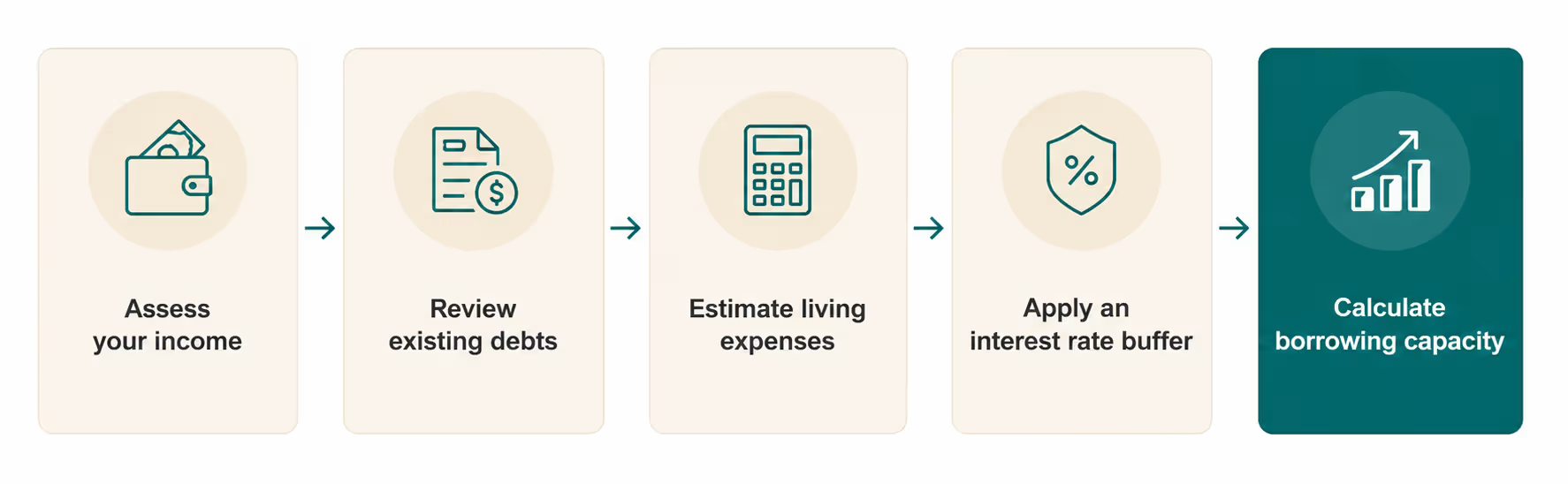
Step 1: Your Income Is Assessed
The lender adds up income coming into your household, salary, overtime, bonuses, commissions, rental income, government benefits and self-employed earnings. Stable, predictable income generally supports a stronger position.
Step 2: Your Existing Debts Are Reviewed
Every debt you carry competes with your future mortgage repayment. Lenders look at credit cards, car loans, personal loans, HECS-HELP debt, Buy Now Pay Later accounts, and existing mortgages.
Step 3: Your Living Expenses Are Estimated
This covers groceries, utilities, insurance, transport, medical costs, childcare and entertainment. Higher regular expenses mean less room for loan repayments.
Step 4: An Interest Rate Buffer Is Applied
Banks don’t just check whether you can afford today’s rate. They add a safety margin on top.
| Scenario | Rate Used |
| Current interest rate | 6.00% |
| Assessment rate (with buffer) | 9.00% |
Don’t rely on today’s interest rate when estimating your budget. Lenders test affordability against a higher rate, so it’s worth doing the same yourself.
Don’t rely on today’s interest rate when estimating your budget. Lenders test affordability against a higher rate, so it’s worth doing the same yourself.
How Does Income Affect Borrowing Power?
Income is one of the biggest factors in how much you can borrow, but lenders care about both the size and the reliability of that income.
Full-Time Employees
Full-time income is usually the most straightforward to assess, typically verified through payslips, employment contracts and bank statements.
Casual Employees
Casual work doesn’t rule out approval, but lenders usually want regular hours and a consistent employment history, often six to twelve months.
Self-Employed Borrowers
Expect to provide tax returns, financial statements and Business Activity Statements. Lenders often look at more than one year of earnings before settling on a figure.
Key Points
How Do Existing Debts Reduce Borrowing Power?
Yes, and often more than people expect. Every repayment you’re already making is money the lender assumes won’t be available for a mortgage.
Credit Cards
This is one of the most misunderstood parts of borrowing power. Most lenders assess your full credit limit, not your current balance.
| Credit Card Detail | Amount |
| Card limit | $15,000 |
| Current balance owing | $500 |
| Amount the lender may assess | $15,000 (the full limit) |
Keeping unused credit cards open with high limits can quietly reduce your borrowing power, even if you rarely use them.
Car Loans, Personal Loans And BNPL
Car loans and personal loans create fixed monthly repayments that reduce what’s left for a mortgage. Buy Now Pay Later accounts can also be included by some lenders.
Does HECS Debt Affect Borrowing Power?
In most cases, yes. HECS-HELP repayments are deducted automatically once your income passes certain thresholds, which can reduce what a lender will offer you.
Applicant A
- Income: $90,000
- No HECS debt
- More income available for repayments
Applicant B
- Income: $90,00
- HECS debt
- Lower available income due to compulsory repayments
Both applicants earn the same salary, but Applicant B may be offered a smaller loan. The exact impact depends on income level, repayment thresholds and individual lender policy.
How Do Interest Rates Affect Borrowing Power?
Interest rates shape both your repayments and how much a lender will offer. When rates rise, repayments increase and borrowing power generally falls.
Your borrowing power is determined by far more than just your salary.
This is why your borrowing limit isn’t fixed, it shifts as the interest rate environment changes, even if your income and expenses stay exactly the same.
Borrowing Power Examples
These examples are illustrative only and don’t represent guaranteed lending outcomes. Every lender assesses applications differently.
A buyer with $100,000 income, a $20,000 credit card limit and a $500/month car loan may have noticeably lower borrowing capacity than a debt-free borrower on the same income.
Single Buyer
- Income: $80,000
- No debts, no dependants
- Moderate borrowing range
Couple Buying Together
- Combined income: $150,000
- Minimal debts
- Substantially higher borrowing power
How Can You Increase Your Borrowing Power?
Improving your borrowing capacity is something that often starts months before you submit an application, not the week before.
Reducing a $20,000 credit card limit before applying can improve your borrowing capacity more than many buyers expect.
Different lenders weigh these factors differently, so it’s worth comparing more than one before settling on an application.
Not sure where you stand?
A mortgage broker can walk through your numbers and explain what different lenders may offer based on your situation.
What Mistakes Do First Home Buyers Commonly Make?
- Assuming borrowing power equals affordability
- Keeping large, unused credit card limits open
- Taking on new debt right before applying
- Ignoring how HECS debt affects the numbers
- Not checking their credit file beforehand
- Assuming every lender will offer the same amount
Quick Knowledge Check
What do most Australian lenders assess on a credit card?
Australian lenders usually assess the full credit limit rather than the balance owing because the remaining available credit could be used at any time.
Great Work!
You’ve developed a strong understanding of borrowing power and lender assessments.
Lesson Summary
- ✓ Income is only one factor lenders consider.
- ✓ Credit card limits can reduce borrowing capacity.
- ✓ Living expenses directly affect affordability.
- ✓ Lenders apply an assessment rate buffer.
Summary
Borrowing power isn’t just about your pay slip. Lenders weigh up your income, your debts, your everyday expenses, your employment history, your credit file and the interest rate environment before deciding what they’re willing to lend.
The good news is that several of these factors are within your control. Reducing unused credit limits, paying down debt, tightening up spending and keeping employment stable can all make a genuine difference, often before you’ve even submitted an application.
Frequently Asked Questions
Want to estimate your borrowing power based on your own numbers?
Key Takeaways
Continue Learning
Understanding Pre-Approval
Now that you know how much you may be able to borrow, the next step is understanding pre-approval, what it means, how long it lasts, and why it matters before you start making offers.
Chapter 3 · Approx. 4 min read
