
The first home buying process can feel like too much at once. There is borrowing power, deposits, grants, loan choices, contracts, approval and settlement.
The good news is that buying your first home follows a structured path. Once you can see the order, the process becomes easier.
This guide explains the first home buying process in Australia from early planning through to settlement and moving into your new home.
What Is The First Home Buying Process?
The first home buying process is the series of steps a buyer follows to move from planning and saving through to loan approval, property purchase, settlement and getting the keys.
Definition
First home buying process: The practical path from checking your finances and building a deposit through to buying, settling and moving into your first home.
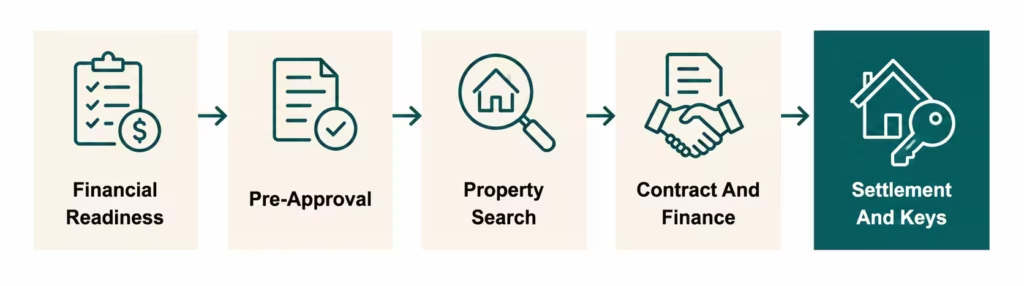
How Do You Start The First Home Buying Process?
You start by understanding your financial position. This should happen before serious property inspections, because your finances shape every decision that follows.
Review your income, savings, debts, credit card limits, HECS-HELP debt and monthly expenses. Then ask whether you could comfortably manage repayments and still keep emergency savings.
When Should You Calculate Borrowing Power?
Calculate borrowing power early, before you build strong expectations around certain properties. Borrowing power estimates how much a lender may be willing to lend based on your income, expenses, debts, employment and credit history.
Knowing your borrowing power helps you set a realistic property budget and see which homes are within reach.
Treat borrowing power as a guide, not a spending target. The amount you can borrow and the amount you should borrow may be different.
You can read more in our [Borrowing Power lesson] and [Deposit lesson]. For general money guidance, see Moneysmart.
When Do Grants, Deposits And Loan Options Fit In?
Review government assistance and deposit strategy before committing to a purchase plan. Grants and schemes may affect how much deposit you need, what property you choose and what price range is realistic.
Depending on your situation, you may need to review the First Home Owner Grant, First Home Guarantee, stamp duty concessions, the First Home Super Saver Scheme and state-based support.
Government Assistance
- Check personal eligibility
- Check property eligibility
- Confirm current rules
Deposit Strategy
- Include purchase costs
- Keep emergency savings
- Plan for settlement
Loan Structure
- Fixed, variable or split
- Offset or redraw
- Features beyond rate
The lowest interest rate is not always the best loan choice. Structure, flexibility, fees and your future plans also matter.
Why Is Home Loan Pre-Approval Important?
Home loan pre-approval gives an indication of how much a lender may be willing to lend. Many buyers get pre-approval before serious inspections so they can search with more confidence.
Pre-approval may support clearer budgeting, stronger negotiation and early issue spotting. It is not final approval, but it is an important milestone.
Step 1
Prepare identification, income and bank documents
Step 2
Submit details for lender review
Step 3
Receive a conditional indication of borrowing capacity
Step 3
Search for property within a sensible budget
How Do You Search For And Research A Property?
After pre-approval, you can search with a clearer budget. Consider location, property type, lifestyle needs, future plans and whether the property suits your scheme eligibility.
Before making an offer, complete due diligence. This can include reviewing the contract, researching the area, checking future infrastructure, reviewing zoning and understanding ownership costs.
Falling in love with a property before checking the contract, inspection results, local area, ownership costs and finance conditions.
Building and pest inspections can also identify structural defects, water damage, pest activity or maintenance issues. They cost money upfront, but can help prevent larger costs later.
What Happens When You Make An Offer?
Once you are satisfied with the property, you can make an offer. The process depends on whether the sale is private treaty, auction, expression of interest or another method.
If your offer is accepted, the next step is signing the contract of sale. This document sets out the purchase price, settlement date, conditions, rights and obligations.
Do not treat signing a contract as paperwork. It is a major legal step in the buying process.
Need help before making an offer?
A mortgage broker can help you understand finance timing, pre-approval limits and what happens after a contract is signed.
What Happens After The Contract Is Signed?
After signing, you usually submit the formal loan application. The lender then reviews your documents, financial position, the property, valuation and any eligibility requirements.
Most lenders require a valuation to confirm the property supports the requested loan amount. The valuation can affect approval, deposit requirements or loan structure.
Formal Approval Usually Involves
How Do Settlement And Keys Work?
Settlement is the legal transfer of ownership from seller to buyer. Before settlement, finalise loan documents, confirm insurance, arrange utilities and complete a final inspection.
On settlement day, purchase funds are exchanged and ownership transfers. Once settlement is complete, you can usually collect the keys.
Step 1
Arrange building insurance and utilities
Step 2
Complete final inspection
Step 3
Settlement funds are exchanged
Step 3
Collect keys and move in
How Long Does The First Home Buying Process Take?
Every buyer’s timeline is different. Planning may take months or years. Pre-approval can take days to weeks. The property search may take weeks to months. Formal approval and settlement often take several more weeks.
| Stage | Typical Timing |
| Planning and saving | Several months to several years |
| Pre-approval | Days to weeks |
| Property search | Weeks to months |
| Formal finance approval | Days to weeks |
| Settlement | Often several weeks after contract signing |
First Home Buyer Process Checklist
Use this checklist to keep the process in order.
Quick Knowledge Check
Lesson Complete!
Lesson Summary
- ✓ Understanding your financial position should be the first step before searching.
- ✓ Pre-approval helps establish a realistic budget and gives confidence when making offers.
- ✓ Building and pest inspections can identify hidden structural or pest issues.
- ✓ A property valuation confirms the property’s value supports the loan amount.
- ✓ Searching before understanding borrowing power is a common mistake.
Summary
The first home buying process becomes easier when you break it into clear steps. The strongest buyers usually prepare before they start serious property shopping.
By understanding your finances, getting pre-approval, researching properties carefully and following the process through to settlement, you can reduce stress and feel more in control.
Frequently Asked Questions
Key Takeaways
CONTINUE LEARNING
Hidden Costs Of Buying A First Home
Next, we will look at the hidden costs many first home buyers miss, including legal fees, inspections, insurance, moving costs and future ownership expenses.
Chapter 14 · Approx. 3 min read
