
First home buyer property eligibility rules can catch people off guard. A buyer may qualify personally for a grant or government scheme, then miss out because the property itself does not meet the rules.
This is one of the most common traps in the first home buying process. You might have the right income, deposit and residency status, but the home still needs to pass its own tests.
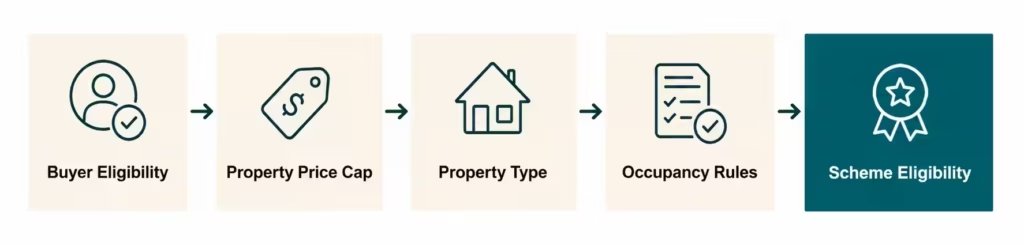
Before you sign a contract, check property price caps, new home rules, owner-occupier requirements, location rules and property type limits.
What Are First Home Buyer Property Eligibility Rules?
First home buyer property eligibility rules are the conditions a property must meet before a buyer can use a grant, guarantee or government scheme.
Definition
Property eligibility: The rules that decide whether a specific home can be purchased using a first home buyer grant, guarantee or government assistance program.
These rules are separate from your personal eligibility. In simple terms, both you and the property usually need to qualify.
Why Do Property Eligibility Rules Exist?
Property eligibility rules exist because government programs are built to support specific housing goals. They are not designed to apply to every home in every situation.
Depending on the program, the rules may encourage new construction, improve affordability, support regional communities or help people buy homes they will live in.
Some first home buyer schemes look at the buyer, the contract price, the property type and the intended use of the home.
This is why one property may qualify while another nearby may not. The difference could be price, location, construction status or whether the buyer plans to live there.
How Do Property Price Caps Work?
Property price caps set the maximum property value or purchase price allowed under a scheme. If the property is above the limit, the buyer may lose access to that program.
Price caps can vary by state or territory, city, regional area and program. A threshold in one area may not apply somewhere else.
State Or Territory
- Rules can differ across Australia
- Check the rules for the property location
Metro Or Regional
- Caps may change by area
- Regional rules can be different
Program Type
- Grants and guarantees may use different limits
- Check each scheme separately
Do not rely on an old screenshot or a friend’s experience. Property price caps can change, so check current rules before making an offer.
For official scheme information, check your state revenue office or Housing Australia.
Do New Homes And Existing Homes Qualify Differently?
New homes and existing homes often receive different treatment. Some first home buyer grants apply only to new homes, while other schemes may allow established properties.
What Is Considered A New Home?
A new home is generally one that has not been previously sold as a residential property and has not been lived in before. Specific definitions can vary by scheme.
Why Do New Homes Receive More Support?
Some programs support new housing because extra supply can help affordability. That is why a new home may qualify when an established home does not.
New Home
- May qualify for certain grants
- Often tied to construction and first sale rules
- Definitions vary by program
Existing Home
- May qualify under some schemes
- May not qualify for new-home grants
- Still needs price and occupancy checks
Qualifying personally is only half the test. The property needs to qualify too.
What Are Owner-Occupier Requirements?
Owner-occupier requirements mean you must live in the property as your main home. Most first home buyer grants and schemes are not designed for investment purchases.
Many programs require buyers to move in within a set timeframe and stay for a minimum period. If you miss those conditions, your eligibility may be affected.
Assuming a grant can be used for any property you buy. If the program requires you to live in the home, an investment purchase may not qualify.
Which Property Types Can Qualify?
Eligible property types depend on the scheme. Houses, townhouses, apartments and house-and-land packages may qualify under some programs, but restrictions can still apply.
House
- Common eligible property type
- Still subject to price and location rules
Apartment Or Townhouse
- May qualify under many programs
- Building and contract details can matter
House And Land
- May involve extra timing rules
- Check build contract and completion dates
Never assume a property type qualifies because it looks like a normal home. Confirm the current scheme rules before signing.
How Do Major First Home Buyer Schemes Treat Property Eligibility?
Major programs can apply different property eligibility rules, so buyers should review each scheme separately.
Step 1
First Home Owner Grant: often linked to new homes, price limits and occupancy rules
Step 2
First Home Guarantee: usually checks purchase price, property type and occupancy
Step 3
Regional programs: may require the property to be in an eligible regional area
Because rules vary, check the exact property address and contract type.
Unsure whether a property qualifies?
A mortgage broker can help you compare scheme rules before you rely on government assistance in your purchase plan.
What Happens If The Property Does Not Qualify?
If a property does not qualify, the buyer may lose access to the grant or scheme. That can change the whole purchase plan.
Possible Outcomes
Property Eligibility Checklist
Before making an offer, use this checklist to avoid missing a property rule.
Quick Knowledge Check
Lesson Complete!
Lesson Summary
- ✓ A buyer may be eligible personally, but the property may not meet scheme requirements.
- ✓ Governments apply property eligibility rules to support housing supply and affordability.
- ✓ A ‘new home’ typically means a property not previously sold or occupied residentially.
- ✓ Many schemes require the buyer to live in the property as their principal place of residence.
- ✓ Non-eligible properties may result in loss of government assistance and higher upfront costs.
Summary
First home buyer property eligibility rules matter because government assistance depends on more than the buyer. The property may need to meet limits around value, type, location, new home status and occupancy.
Before you make an offer, confirm the current rules for the exact scheme you plan to use. That step can help you avoid a last-minute funding gap.
Frequently Asked Questions
Key Takeaways
CONTINUE LEARNING
Common First Home Buyer Mistakes And How To Avoid Them
Next, we will cover the biggest mistakes first home buyers make, from rushing into offers to missing costs and relying on assumptions.
Chapter 12 · Approx. 4 min read
