
Most first home buyers put most of their energy into getting approved. That makes sense. But the decision that follows, which type of home loan to choose, can shape your finances for the next 25 to 30 years.
Many buyers spend weeks comparing suburbs and only a few hours comparing loans. This lesson changes that. We’ll walk through the most common home loan types available in Australia, how features like offset accounts and redraw facilities actually work, and the questions worth asking before you sign anything.
What Is A Home Loan?
A home loan is money borrowed from a lender to buy a property. The lender advances the funds, and you repay them over an agreed period, typically 25 or 30 years.
Two Parts Of Every Repayment
Principal is the original amount you borrowed. Interest is the cost the lender charges for lending you that money. Most Australian home loans are structured as either Principal and Interest, or Interest Only.
Principal And Interest Vs Interest Only: What’s The Difference?
Principal And Interest Loans
This is the most common loan type for first home buyers. Each repayment chips away at both the interest charged and the original loan balance. Over time, your debt shrinks steadily until it’s gone.
Why Buyers Choose P&I
- Equity builds with every repayment
- Less total interest paid over the loan life
- Straightforward, predictable debt reduction
What To Be Aware Of
- Repayments are higher than interest-only loans
- Less short-term cash flow flexibility
Interest Only Loans
With an interest-only loan, repayments during the agreed period cover only the interest. The loan balance itself stays roughly the same.
Loan Amount
$600,000
Interest Only Period
5 years
Loan Balance After 5 Years
Still ~$600,000
This is illustrative only. Actual figures depend on your lender, rate and loan terms.
Interest-only loans may offer lower initial repayments and improved short-term cash flow. However, once the interest-only period ends, repayments increase and you pay more interest in total over the life of the loan.
For most owner-occupier first home buyers, Principal and Interest is the more common structure. Interest-only loans are used in specific situations and are worth discussing carefully with a broker.
Fixed Rate Vs Variable Rate: Which Should You Choose?
This is one of the most common questions first home buyers ask. The honest answer is that neither is always better. They serve different needs.
Fixed Rate Loan
ADVANTANGES
- Rate stays the same for the fixed term (1–5 years)
- Repayments are predictable, easier to budget
- Protected if rates rise during the fixed period
TRADE-OFFS
- Changing or exiting early can mean high break costs
- You don’t benefit if rates fall
- Usually fewer loan features
Variable Rate Loan
ADVANTANGES
- Rates can drop when market conditions improve
- Extra repayments usually allowed without restriction
- Offset accounts often available
TRADE-OFFS
- Repayments can rise if rates increase
- Harder to budget with certainty
The best loan is not necessarily the cheapest loan. It’s the one that best supports your long-term financial goals.
What Is A Split Home Loan?
A split loan divides your borrowing across both fixed and variable portions. For example, 50% fixed and 50% variable.
Why Buyers Choose Split Loans
A split loan isn’t right for everyone, but for buyers who want some budget certainty without locking everything in, it’s worth considering.
What Is An Offset Account And How Does It Work?
An offset account is a transaction account linked directly to your home loan. The money sitting in it reduces the loan balance on which interest is calculated.
Loan Amount
$600,000
Offset Account Balance
$50,000
Interest Calculated On
$550,000
This is illustrative only. Actual figures depend on your lender, rate and loan terms.
The real advantage of an offset account is that your money keeps working for you without being locked away. Unlike making an extra repayment, you can still access those funds whenever you need them.
Many buyers use their offset account as their main everyday account. Every dollar sitting there, even briefly, reduces the interest calculated on your loan that month.
What About Guarantor Loans And Refinancing?
Guarantor Loans
A guarantor loan involves a family member, usually a parent, using equity in their own property as additional security for your loan. No cash changes hands. The benefit for the buyer is that it may reduce the deposit needed or help avoid Lenders Mortgage Insurance.
Entering a guarantor arrangement without everyone getting independent legal and financial advice first. Guarantor loans create real obligations for all parties involved.
Refinancing
Refinancing means replacing your existing home loan with a new one, often to access a better rate, different features or greater flexibility. While it’s more relevant once you own the property, understanding it early helps you think about your loan as a long-term tool rather than a one-time decision.
Before You Choose A Home Loan: Questions Worth Asking
Not sure which structure suits you?
A mortgage broker can compare loan products across multiple lenders and help you find a structure that fits your goals, not just the lowest rate on offer.
Common Home Loan Mistakes First Home Buyers Make
The same patterns come up again and again when buyers choose the wrong loan.
The Four Most Common Home Loan Mistakes
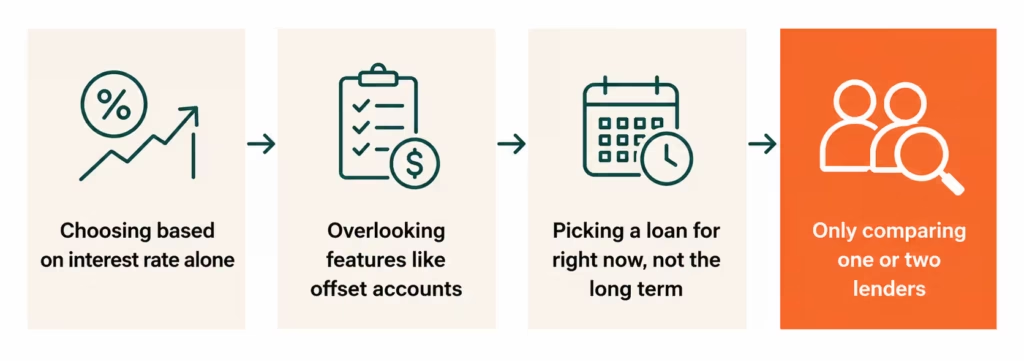
The cheapest rate today isn’t always the best loan overall. Features like an offset account or flexible repayments can be worth more than a slightly lower rate over a 30-year term.
Quick Knowledge Check
Lesson Complete!
Lesson Summary
- ✓ P&I loans reduce balance and pay interest, while IO loans only cover interest during the IO period.
- ✓ Fixed-rate loans provide predictable repayments throughout the fixed term.
- ✓ An offset account reduces the portion of the loan on which interest is calculated.
- ✓ A split loan combines fixed and variable components for certainty and flexibility.
- ✓ Focusing only on interest rate while ignoring features is a common mistake.
Summary
Choosing the right home loan is just as important as choosing the right property. Fixed, variable and split loans each serve different needs. Features like offset accounts and redraw facilities can have a real impact on how much interest you pay and how much flexibility you have along the way.
The best loan isn’t always the one with the lowest rate today. It’s the one that fits how you live, how you manage money, and where you want to be financially in ten years’ time.
Frequently Asked Questions
Key Takeaways
CONTINUE LEARNING
Your Complete First Home Buyer Checklist
In the final lesson, we bring together everything covered in this guide into a practical checklist that helps you work out whether you’re ready to begin your home ownership journey.
Chapter 16 · Approx. 5 min read
