
Saving a deposit and qualifying for a home loan are often the two biggest challenges first home buyers face. To help, federal, state and territory governments offer a range of grants, concessions and assistance schemes.
These government grants for first time home buyers are designed to lower upfront costs, reduce deposit requirements, and make home ownership more accessible. Many buyers are surprised to learn they can often combine more than one scheme at the same time.
This lesson walks through the main programs available, who tends to qualify, and the mistakes to avoid when relying on them.
An eligible buyer may be able to combine the First Home Owner Grant, stamp duty concessions, the First Home Guarantee and the First Home Super Saver Scheme all at once.
What Is The First Home Owner Grant (FHOG)?
The First Home Owner Grant is one of Australia’s most well-known assistance programs, designed to help eligible Australians purchase or build their first home. It exists nationally, but each state and territory administers it separately.
What Varies By State
The grant is generally intended to encourage building and buying new homes, rather than established properties.
Who Is Eligible For The FHOG?
Assuming the grant amount is the same everywhere. Grant amounts, property caps and eligibility rules all differ between states and territories.
Can The FHOG Be Used As Part Of A Deposit?
It depends on lender policy, loan structure and the timing of the grant payment. In many cases, the grant can contribute towards purchase costs and reduce the savings required, but it generally doesn’t replace the need for your own financial contribution.
What Is The Home Guarantee Scheme?
The Home Guarantee Scheme is a federal initiative that helps eligible Australians buy sooner, with a smaller deposit, while avoiding some costs typically tied to high loan-to-value lending.
HOW IT WORKS
Rather than giving buyers cash, the government supports eligible loans through a guarantee arrangement, allowing buyers to purchase with significantly less than a traditional 20% deposit.
The First Home Guarantee
The First Home Guarantee is the most popular program under the Home Guarantee Scheme, designed specifically for eligible first home buyers. It may allow a deposit as low as 5%, subject to eligibility and available places.
| Item | Rate Used |
| Property price | $700,000 |
| Traditional 20% deposit | $140,000 |
| Potential 5% deposit under the guarantee | $35,000 |
That gap can significantly cut the time needed to save before buying.
The Regional First Home Buyer Guarantee
This version supports eligible buyers purchasing in regional Australia, encouraging home ownership outside major metro areas. Eligibility and property location requirements can differ from other guarantee programs, so it’s worth confirming before proceeding.
What Is The Help To Buy Scheme?
The Help to Buy Scheme assists eligible Australians who have stable income and employment but are still struggling to enter the market. It works differently from a typical grant.
Shared Equity Model
The government contributes towards the purchase price in exchange for an ownership interest in the property, which may reduce your deposit, loan size and monthly repayments.
Because this structure differs significantly from traditional ownership, it’s worth weighing both the short-term benefits and the long-term implications carefully.
What Is The First Home Super Saver Scheme (FHSSS)?
The FHSSS lets eligible Australians save for a deposit using voluntary superannuation contributions, taking advantage of the tax treatment inside super.
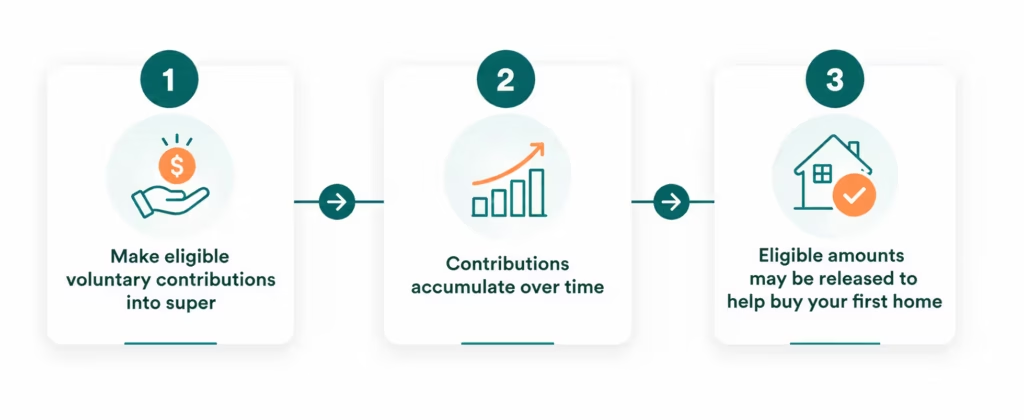
The scheme tends to suit buyers who are still a few years away from purchasing and are focused on building their deposit steadily.
The First Home Super Saver Scheme works best when you start early. The longer your contributions sit in super, the more time they have to build towards your deposit.
Can You Combine Multiple Government Programs?
One of the biggest misconceptions among first home buyers is that only one program can be used at a time. In many cases, several can be combined.
Potentially Combinable
The exact combination available depends on your location, property type, income and each program’s eligibility rules. Combining programs may substantially reduce upfront costs.
A grant may help you purchase sooner, but you must still satisfy the lender’s approval criteria.
Does Government Assistance Increase Borrowing Power?
Not directly. Government assistance and borrowing power are related but separate things.
What Assistance Can Do
- Reduce upfront costs
- Increase available funds
- Lower deposit requirements
What Lenders Still Assess
- Income and expenses
- Existing debts
- Credit history and serviceability
A grant may help you purchase sooner, but you’ll still need to satisfy the lender’s own approval criteria.
Not sure which schemes you’re eligible for?
A mortgage broker can check your eligibility across multiple programs and explain how they might work together for your situation.
Real Example: Combining Multiple Benefits
Consider a first home buyer purchasing a newly built property. Instead of relying only on personal savings, they may combine several forms of assistance.
FHOG
- Reduces upfront cost
Stamp Duty Concession
- Lowers purchase fees
First Home Guarantee
- Lowers deposit requirement
This shows why understanding available assistance can be just as important as understanding your borrowing power.
Common Mistakes With Government Schemes
- Assuming every buyer automatically qualifies
- Focusing only on grants while ignoring borrowing power
- Missing property price caps tied to a scheme
- Assuming program rules never change
Quick Knowledge Check
Lesson Complete!
Lesson Summary
- ✓ Government assistance programs reduce upfront costs for eligible first home buyers.
- ✓ The FHOG is administered by each state and territory with varying eligibility and amounts.
- ✓ The First Home Guarantee may allow eligible buyers to purchase with as little as 5% deposit.
- ✓ The FHSSS allows saving for a deposit through voluntary superannuation contributions.
- ✓ Always check eligibility criteria and property price caps before assuming you qualify.
Summary
Government grants and assistance programs can play a major role in helping Australians buy their first home. The First Home Owner Grant, First Home Guarantee, Help to Buy Scheme and First Home Super Saver Scheme may each reduce upfront barriers for eligible buyers, and in many cases, they can be combined.
Still, government assistance is only one part of a bigger strategy. Understanding your borrowing power, deposit position and overall affordability remains essential to making a sustainable, informed decision.
Frequently Asked Questions
Key Takeaways
Continue Learning
How Much House Can You Actually Afford To Buy?
Next, we’ll look at affordability, repayments and interest rates, the practical factors that determine how much home you can realistically afford, beyond just borrowing power and grants.
Chapter 5 · Approx. 4 min read
